

Homa Bay Residents Want Parliament to Shield TSC From Political Interference.
Education stakeholders in Homa Bay County want Parliament to pass laws that stop politicians from interfering with how the Teachers Service Commission (TSC) recruits and deploys teachers. The demand came up during a public participation forum on proposed education reform bills, held on Saturday, September 19, 2026, at Tom Mboya University in Homa Bay Town.
The forum was part of a wider nationwide exercise. The National Assembly’s Departmental Committee on Education is holding hearings in 31 counties between September 14 and September 25, 2026, as part of the constitutional requirement for public participation in law-making. The committee is gathering views on six proposed bills meant to reform how Kenya’s education sector is funded, managed and governed.
What Stakeholders Told the Committee
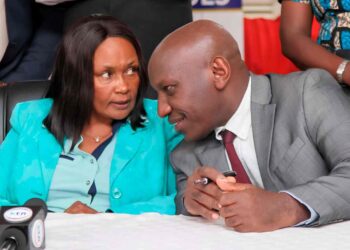
The Homa Bay session was chaired by the committee’s acting chairperson, Kibra MP Peter Orero. The Kenya National Union of Teachers (KNUT) Homa Bay Branch Executive Secretary, Hilder Otieno, raised the sharpest concern: politicians, she said, are stripping TSC of its constitutional mandate to employ teachers by handing out employment letters at funerals and public rallies.
She argued that politicians lack the technical grounding to apply proper recruitment criteria, and that the practice creates real unfairness. Some newly trained teachers get absorbed within a year or two of finishing college, she said, while others wait far longer for a posting because they lack a political patron. Her proposed remedy was straightforward: give TSC full independence to do its job without political input.
This is not a new complaint nationally. TSC’s recruitment process has repeatedly come under public scrutiny over claims that names are inserted or replaced outside the commission’s normal shortlisting and interview procedures, though such claims are handled case by case and are not evidence of a systemic breakdown. What made the Homa Bay intervention notable is that it was raised directly to the parliamentary committee currently deciding whether to write stronger legal protections for TSC into law.
The Six Education Reform Bills Before Parliament
The Homa Bay hearing sits inside a much larger legislative process. Parliament’s Departmental Committee on Education is collecting views on six bills arising from the report of the Presidential Working Party on Education Reforms (PWPER):
| Proposed Bill | What It Covers |
|---|---|
| Kenya Institute of Curriculum Development Bill | Governance and mandate of KICD, the body that designs the curriculum |
| Kenya National Qualifications Framework (Amendment) Bill | How qualifications are recognised and ranked across education levels |
| Tertiary Education, Placement and Funding Bill | University and TVET placement and funding mechanisms |
| Pre-Service Education and In-Service Training Bill | Teacher training standards before and during service |
| Basic Education Bill | Governance of pre-primary, primary and junior secondary education, including Education Boards |
| Pre-Service Education and In-Service Training in Basic Education Bill | Training requirements specific to basic education teachers |
Source: the six Bills subjected to public participation, as confirmed at a related hearing at Masinde Muliro University of Science and Technology.
A separate Teachers Service Commission (Amendment) Bill, 2025, sponsored by Kimilili MP Didmus Barasa, is also under review by the same committee. That bill proposes restructuring the commission, including moving the chairperson and commissioners to part-time roles as a cost-saving measure, and it touches directly on questions of TSC independence and governance — the same theme Homa Bay stakeholders raised.
Why the “Political Interference” Complaint Matters
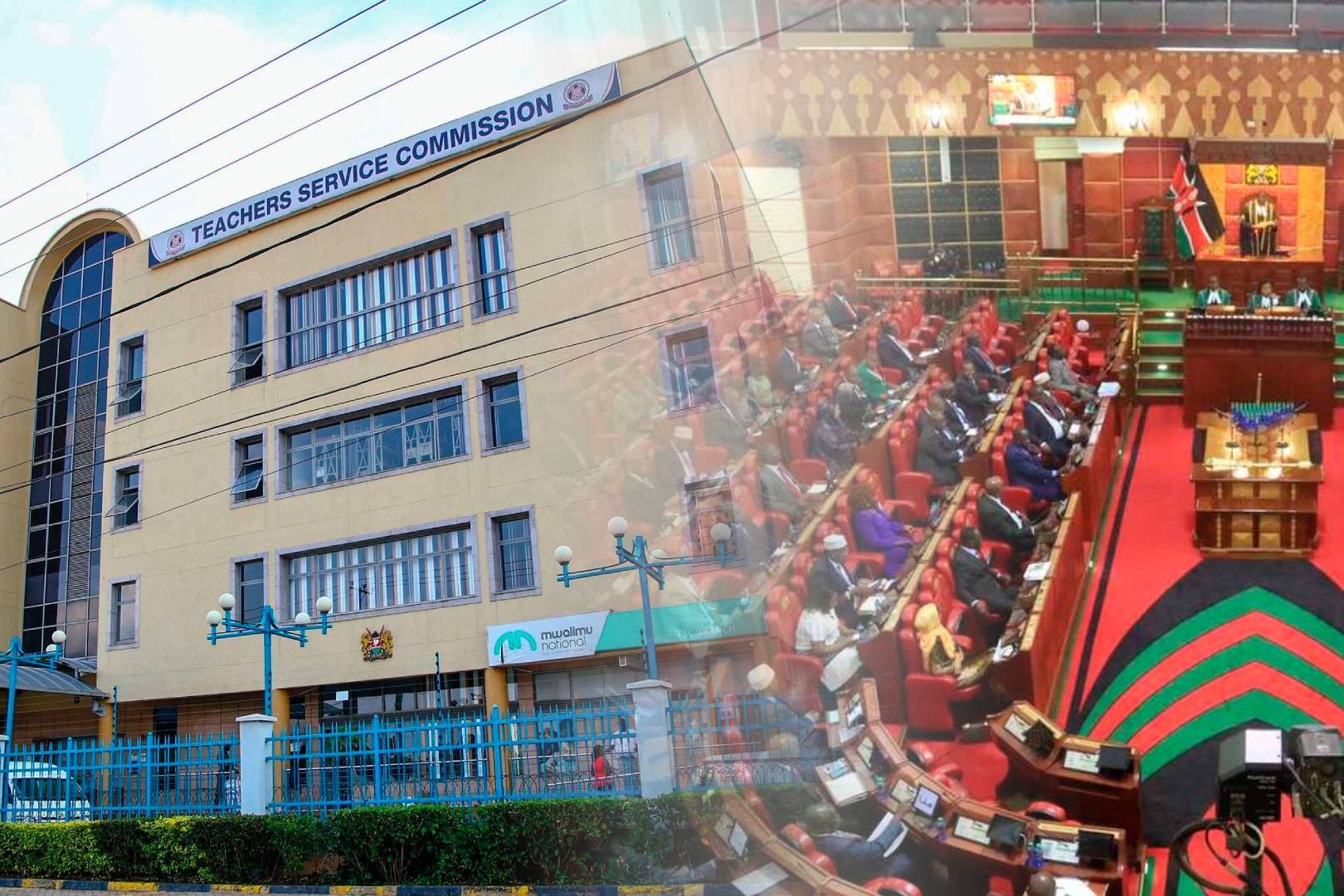
TSC is a constitutional commission established under Article 237 of the Constitution of Kenya, 2010, with the exclusive mandate to recruit, register, deploy, promote, discipline and remove teachers in public schools. Because this mandate is constitutionally entrenched, any process where employment letters are issued or influenced outside TSC’s own recruitment procedures undercuts both the commission’s authority and the fairness of the process for trained teachers waiting for posting.
This tension between TSC and political or ministerial actors is not new. During earlier public hearings on the PWPER report, TSC’s leadership publicly rejected some of the task force’s recommendations, saying the proposals had not properly accounted for the commission’s views and would put it at odds with the Ministry of Education and the Constitution. The Homa Bay stakeholders’ call for legal insulation from political interference echoes that same underlying dispute, just from the perspective of teachers and unions rather than TSC management itself.
For unemployed trained teachers, the practical effect of interference is a recruitment queue that doesn’t run on merit or waiting time. TSC’s official recruitment process is supposed to be based on advertised vacancies, shortlisting by County/Sub-County TSC selection panels, and score-based interviews. Employment letters distributed outside that process — regardless of who hands them out — bypass those safeguards entirely.
Who Should Chair Education Boards? A Live Disagreement
Homa Bay stakeholders also raised a governance issue that goes beyond TSC: who should chair County and Sub-County Education Boards.
Under the current Basic Education Act, 2013, that role does not belong to a National Government Administrative Officer (NGAO). Instead, the Cabinet Secretary appoints an educationist of at least five years standing, based in the county, to chair the County Education Board, with the County Director of Education serving as secretary. peopledaily
The draft Basic Education Bill — one of the six bills now before the committee — proposes reversing that arrangement. It would make County Commissioners the chairpersons of County Education Boards, restoring a role NGAOs held before 2013 under the old Education Act, Cap 211, when the District Commissioner was invariably the chairperson of the District Education Board.
| Basic Education Act, 2013 (current law) | Basic Education Bill (proposed) | |
|---|---|---|
| County Education Board chair | Educationist appointed by the CS Education | County Commissioner (NGAO) |
| County Education Board secretary | County Director of Education | County Director of Education (retained) |
| Sub-county level (as raised in Homa Bay) | No standard NGAO chair | Deputy County Commissioner proposed to chair |
Homa Bay stakeholders — and, according to Orero, residents in most of the other counties the committee has visited — oppose the shift back to NGAO chairs. They specifically object to Deputy County Commissioners chairing Sub-County Education Committees, and want boards led instead by local residents with genuine education-sector expertise. Their argument is essentially the same one driving the TSC complaint: administrative or political officials, however senior, are not a substitute for people who understand how schools and curriculum delivery actually work.
This is one of the clearest points of friction the committee will have to resolve before the bills go to a full House vote, since it pits the government’s stated preference for NGAO oversight against a fairly consistent public demand across multiple counties for locally rooted, education-qualified board leadership.
Calls to Strengthen SEPU
Otieno also asked the committee to push for stronger funding and support for the School Equipment Production Unit (SEPU), the state agency that designs, manufactures and distributes science kits, laboratory equipment and other teaching materials to public schools, particularly for Competency-Based Curriculum (CBC) science subjects.
The request reflects a real capacity gap. Kenya has more than 23,000 public primary schools, most without science laboratories, and as of early last year only around 2,500 of them had acquired the science kits required for CBC delivery. SEPU’s mobile science laboratories and kits are meant to close that gap cheaply — a mobile lab costs a fraction of what it takes to build and equip a permanent laboratory — but supply has consistently lagged behind demand. Homa Bay stakeholders want the National Assembly to allocate SEPU more resources so schools, especially in under-resourced sub-counties, can actually get the equipment CBC science teaching requires.
The Unresolved JSS Domiciliation Question
One issue produced no consensus in Homa Bay: whether Junior Secondary School (JSS) should stay domiciled in primary schools or move to secondary schools. Some teachers at the forum wanted JSS transferred to secondary school campuses, arguing this would give Grade 7-9 learners better access to laboratories, specialist teachers and subject-based classrooms. Others wanted JSS to remain in primary schools, citing continuity for young learners and the practical cost of relocating classes.
This split mirrors a national debate that has run since JSS was first domiciled in primary schools under CBC. It is one of several governance questions the Basic Education Bill is expected to settle, alongside board leadership and school management structures — and similar mixed views have surfaced at other county hearings in the same tour, including Kisumu and Trans Nzoia.
What Happens Next
Orero told the Homa Bay gathering that the committee would give the submissions due consideration as it finalises its report on the six bills. Public hearings continue in the remaining counties on the schedule through September 25, 2026, after which the committee is expected to compile a consolidated report incorporating views gathered nationwide before the bills proceed through the normal legislative process — committee report, House debate, and eventual vote.
For teachers, unions and county education stakeholders, the practical stakes are clear: how these bills eventually define TSC’s independence, who sits atop county education governance, and how school equipment funding is prioritised will shape teacher recruitment fairness and classroom resourcing for years to come.
Frequently Asked Questions
Does TSC currently allow politicians to issue teacher employment letters?
No. TSC’s official recruitment process runs through advertised vacancies, shortlisting and interviews conducted by TSC’s county and sub-county selection panels. Any employment letter issued outside that process falls outside TSC’s own recruitment procedure, which is why stakeholders in Homa Bay flagged the practice as improper.
Who currently chairs County Education Boards in Kenya?
Under the Basic Education Act, 2013, the chairperson is an educationist with at least five years’ standing appointed by the Cabinet Secretary for Education, not a County Commissioner. The proposed Basic Education Bill would change this.
What is SEPU?
The School Equipment Production Unit is a government agency that designs and supplies science kits, laboratory equipment and teaching aids to public schools, largely to support CBC science instruction.
When will the six education reform bills become law?
They are still at the public participation stage as of September 2026. After hearings conclude across all 31 scheduled counties, the committee will compile its report before the bills move to debate and a vote in the National Assembly. No enactment date has been confirmed.
Read Also: P1 Teacher Diploma Upgrade in Kenya: Why Choosing Between DSTE, DPTE and ECDE Matters