











Supreme Court Ruling That Will Guide IEBC in 2027 Presidential Election
The Independent Electoral and Boundaries Commission (IEBC) have moved to clear the air about the handling of presidential election results ahead of the 2027 General Election that’s scheduled for August 10th. The good news is that they plan to stick to the interpretation of the law given by the Supreme Court.
IEBC Chairperson Erastus Ethekon said point blank that the commission will only do what the courts have told them is the right thing to do – so no manipulating or altering results at the National Tallying Centre. He made these comments on Tuesday, November 24th at a breakfast meet with a bunch of journalists who cover politics.
Ethekon wants to reassure people that they’re not trying to go off on some tangent with new procedures that aren’t even legally allowed, especially given that the Supreme Court already told them how to handle presidential election results.
“Every single one of us at IEBC are clear: the Supreme Court has settled this whole issue of how to manage election results. We aren’t even thinking about trying to come up with some new wild idea outside the law,” Ethekon said quite straightforwardly.
This all comes at a time when there’s a lot of debate going on about whether presidential results declared at the constituency tallying centres should actually go through some sort of verification at the national level.
IEBC Clarifies Position on Presidential Election Results Transmission
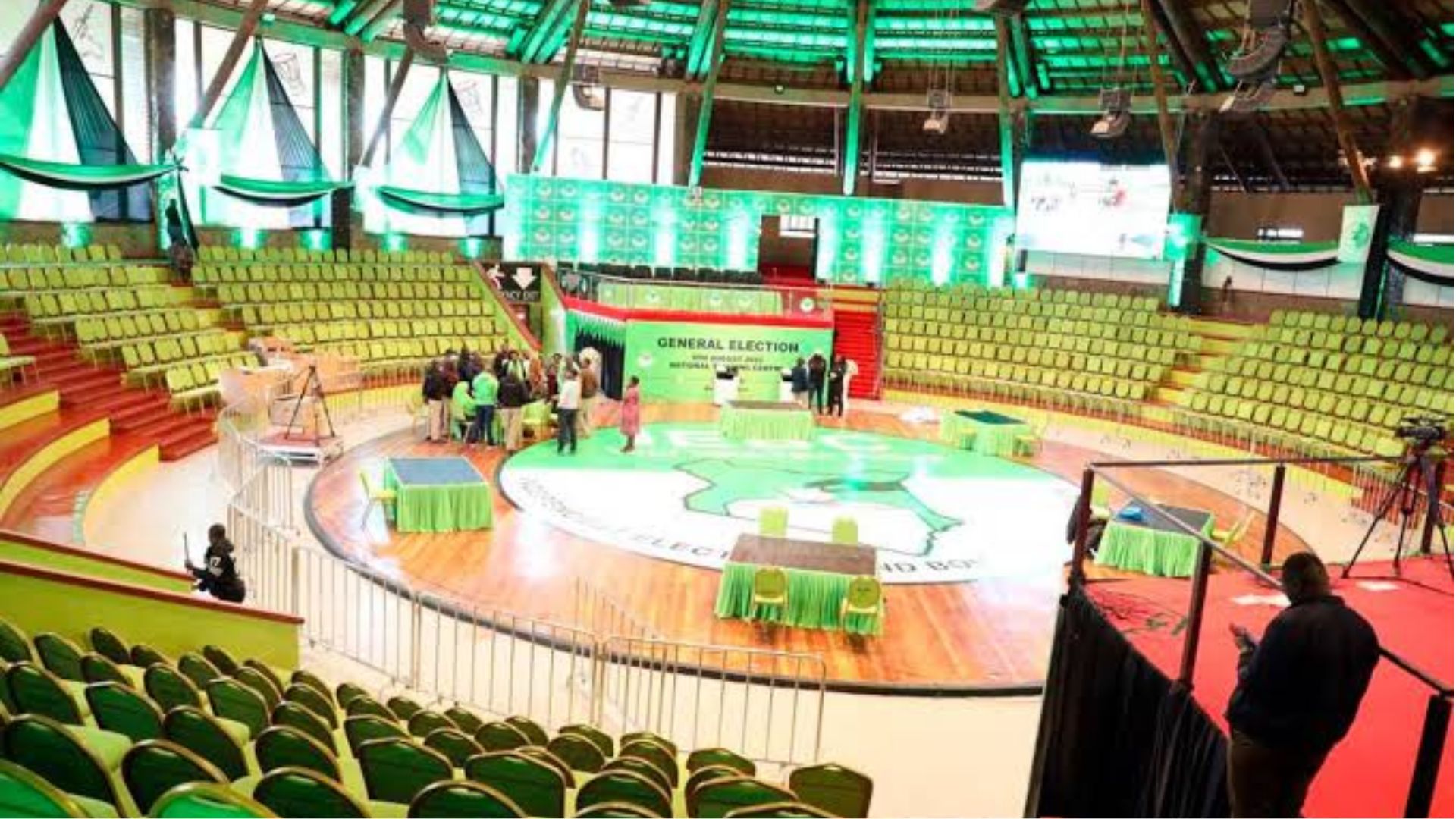
Ethekon defended the National Tallying Centre – saying that IEBC is just doing their job by collecting, tallying and verifying the results before they can even think about announcing a winner. He insisted that it’s all going to happen in accordance with all the legal rules and decisions that have been made about managing election results.
He also shot down the idea that the national centre could be used to fiddle with the results.
IEBC got a bit of a reaming for their handling of the 2022 presidential election and it seems some folks still want to know for sure how they’re going to handle things this time around.
What Supreme Court Ruled on IEBC Election Results Management
The Supreme Court’s ruling back on September 5, 2022 still has people talking , it’s all about how IEBC handles presidential election results. The court said that the commission is totally responsible for tallying and verifying the results at the National Tallying Centre and that none of them (including the chairperson) get to operate outside the rules.
In short, the chairperson can’t just run off with the results on their own and ignore what the rest of the commissioners have to say. And despite all the arguments within the commission back in 2022 – the Supreme Court was very clear that they don’t get any special powers that let them override the rules.
All of this came about because the 2022 commissioned was pretty split during the presidential election, actually 4 of them at the time ended up disowning the results announced by the then head of IEBC.
High Court Ruling on National Tallying of Presidential Results
As things turned out, the issue of national tallying and verification got thrown into the mix in a petition filed by Busia Senator Okiya Omtatah – who was querying whether the whole process actually stacks up with the constitution. And it’s worth noting, the senator was challenging the constitutionality of the whole thing.
September 22nd 2026 marked the day when the High Court dismissed the petition, with Justice Gregory Mutai coming to the conclusion that IEBC is supposed to do the tallying and verification of presidential results on a national level.
But what’s also important to note, the judge made it pretty clear that this exercise doesn’t give the commission the power to go behind the scenes and alter the figures that’ve already been declared and certified by the returning officers at the constituency level.
In simple terms, national tallying is about gathering up the results from the different constituencies, while verification is about checking that those results actually check out against the certified records.
The court also stepped in and made it clear that the exercise needs to be done by all the commissioners working together and that candidates’ agents and election observers have got the same access to the underlying data that the commission is looking at.
The court also made it pretty clear that if there are any discrepancies between the electronically transmitted results and the physical records that were delivered – those need to be written down, explained and made public.
It all boils down to reinforcing the distinction between verifying presidential election results on a national level and actually changing the figures that’ve already been declared at the tallying centres in the constituencies.
Maina Kiai Ruling on Finality of Election Results
Looking at the National Tallying Centre, it’s worth looking back at the 2017 Maina Kiai case, when the Court of Appeal came down with a ruling that said basically the results announced at the polling stations are the final word, and that the IEBC chairperson can’t just go and alter them whenever they feel like it.
As a result, subsequent court decisions have just reinforced the idea that it’s really important to keep a clear distinction between the finality of results at the different stages of the electoral process – and the commission’s responsibility to get the national presidential tally sorted on a constitutional basis.
All of these principles still count for a lot as IEBC gets set to prepare for the 2027 General Election.
Parliament’s Position on Elections Act Amendments
The debate over the Elections Act has also had a big impact on how Parliament is thinking about proposed changes to the Act. Particularly, there are concerns about how election results are transmitted, counted and declared.
The Elections (Amendment) (No. 2) Bill, introduced in 2024, got through the Senate but was trying to introduce some big changes to how election results are declared. Specifically, the Bill wanted to get rid of a key part of the current law (Section 39 of the Elections Act) governing how those results are declared.
One bit of the Bill that really got peoples’ attention was Clause 22, which would have changed the way election results get counted and declared – effectively introducing a new system for transmitting and declaring those results.
In addition, the Senate version of the Bill would have dropped the requirement that the IEBC set up a way for people to livestream results as they come in from the polling stations.
But this proposed change caused real concern among people who would be directly affected by election results, including the idea that the public wouldn’t be able to get access to the information they need to keep the process transparent.
But when the Bill got to the National Assembly the MPs took a different view on things.
By October 22 2026, the National Assembly had actually voted to pass the Bill but had also made some significant amendments to the original Bill – including getting rid of Clause 22 and sticking with the original Section 39 of the Elections Act.
This decision was a real victory for anyone who believes that live streaming results from the polling stations was important for transparency and accountability.
And in defending the decision, Kimani Ichung’wah, the National Assembly’s Majority Leader, said that Parliament had carefully thought through the High Court’s ruling from September when they were making their decision on the amendments.
But the decision still isn’t law – because of the way the National Assembly had altered the original Bill, it now has to go back to the Senate for further consideration in line with Article 110(4) of the Constitution.
IEBC Election Results Transmission and Katiba Institute Case
The current debate about the Elections Act has some deep roots, going back to a court case that went all the way to the top in 2018.
Katiba Institute had brought a case against some changes to the law that were made back in 2017, after the presidential election that year was annulled.
The High Court ruled in April 2018 that some key parts of the law were actually unconstitutional because they undermined the way the electoral commission works and the transparency and accountability of the process.
Some of the bits of the law that were challenged were the bits about how election results are transmitted electronically and physically and how the results are actually declared.
The court said that some of the bits about transmitting election results weren’t clear enough and could actually give people ways to cheat and manipulate the results – by undermining the need for things like transparent and verifiable records.
The court also decided that bits of the law that said electronic transmission of results was just for information and allowed people to ignore the electronic results altogether were also bad.
The Court of Appeal upheld that decision in October 2023 in a case called National Assembly v Katiba Institute and six others.
The Appellate court stuck to the High Courts decision about making certain bits of the law (sections 39(1C)(a) 39(1E), 39(1F) and 39(1G)) of the Elections Act invalid, but also upheld the bit of the law that said electronic systems should make the process as transparent as possible.
The case has been very important in shaping Kenyas laws around election results transmission and making sure that electronic systems actually do promote transparency and accountability.
IEBC Promises Transparency at National Tallying Centre Ahead of 2027 Polls
While appeasing all the stakeholders ahead of the 2027 General Election, IEBC’s Ethekon let journalists, party agents and the international observers know they’d have no problem monitoring the results management process.
Chasing down rumors that the commission was planning to hide information at the National Tallying Centre, Ethekon wasn’t having it – insisting that stakeholders would have a front row seat to the verification and declaration process.
“Look around you, journalists will be there, party agents will be there, the international community, the international media, our election observers – what more accountability are we supposed to be looking for?” he pointed out.
Ethekon said that journalists would be allowed to watch the proceedings at polling stations, at all 290 constituency tallying centres and the National Tallying Centre. But that’s not all – the commission also plans to set up a comms hub so journalists can keep up to date with IEBC’s activities on the ground and get timely news about the electoral process.
The IEBC chairperson also talked about the agreement they have with media houses which is an ongoing partnership, and they’re committed to regular talks, sharing info and best practice sharing in terms of electoral processes.
But he also had some tough love for the media – urging them to focus on actual facts and not just amplify whatever politicians happen to say – he warned that misinformation, propaganda and hate speech can have a pretty toxic impact on public confidence in the election and voter turnout.
IEBC Announces Enhanced Voter Registration Ahead of 2027 Elections
In another development, IEBC is planning to get on with a new voter registration drive, starting in January 2027.
The details as yet are a bit sketchy – but the exact start date will be decided upon later when the commission is ready to roll, which will probably be just before the General election scheduled for August 10.
Ethekon asked the media to lend a hand and get involved in voter education and registration efforts, he wants to see more eligible Kenyans getting involved in the electoral process.
The voter registration exercise will be just one part of IEBC’s preparations for the 2027 polls, alongside efforts to boost transparency and confidence in the election results. And as the election gets closer, IEBC says they’ll be sticking to the law and following the courts, and also letting everyone watch the electoral process.
ALSO READ: IEBC Commissioner Anne Nderitu Reveals How 2027 Election Results Will Be Declared
Supreme Court Ruling That Will Guide IEBC in 2027 Presidential Election