









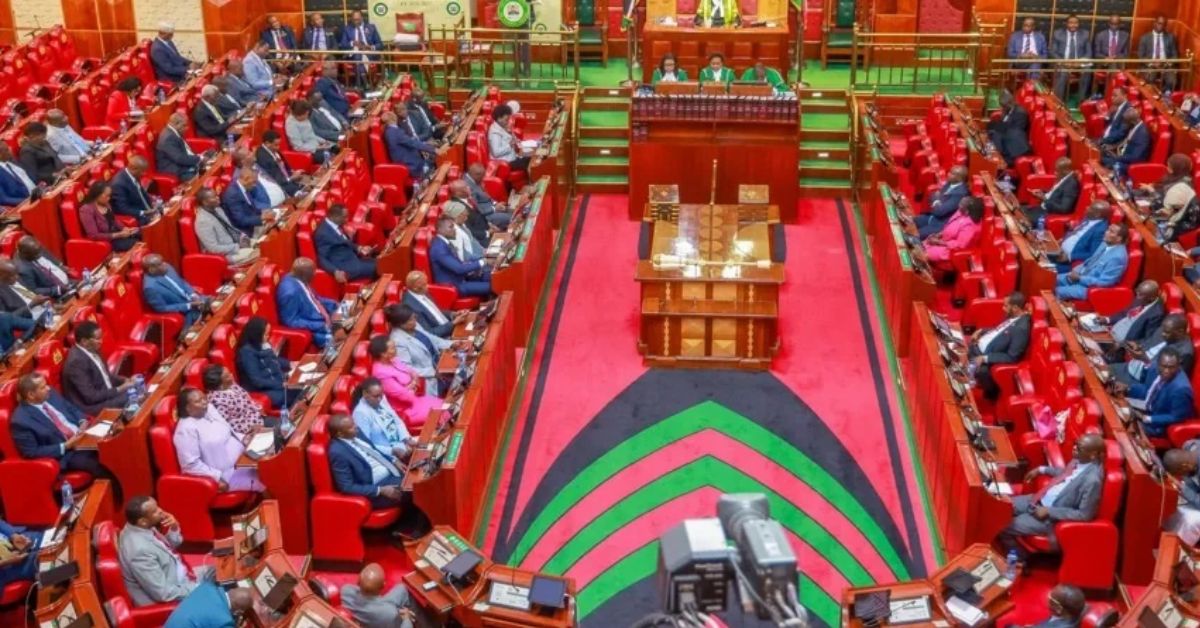
Kenya’s proposed Online Safety Bill, 2026, has sparked concerns among human rights organisations, with critics warning that some provisions could restrict freedom of expression, expose private communications to scrutiny and make it harder to document human rights violations.
The Bill, sponsored by Embakasi West MP Mark Mwenje, seeks to address online exploitation, cyberbullying, pornography, predatory behaviour and other harmful digital content. However, the Missing Voices Coalition argues that the proposed law could also threaten the digital freedoms that journalists, activists and ordinary Kenyans rely on to demand accountability.
Why Kenya’s Online Safety Bill 2026 is raising concerns
The internet has increasingly become an accountability tool for ordinary Kenyans.
Mobile phone recordings have helped expose alleged police brutality, while photographs and social media posts have helped draw attention to enforced disappearances and missing persons.
For families searching for abducted relatives, online platforms can provide a way to share information, reach witnesses and mobilise public support.
Against this background, the Coalition has questioned whether the proposed legislation provides sufficient safeguards against censorship and government interference.
The concerns are particularly significant given Kenya’s history of struggles for freedom of expression, multiparty democracy and constitutional reforms.
Sh500 million fines: What Clause 18 of the Bill proposes
One of the most contentious provisions is Clause 18, which proposes fines of up to Sh500 million or 10 per cent of a provider’s annual global turnover, whichever is higher.
Human rights advocates fear that the threat of such penalties could encourage digital platforms to remove controversial material rather than risk regulatory action.
This could affect content documenting alleged human rights abuses, investigative journalism and criticism of government policies.
Platforms operating under significant financial pressure might also rely heavily on automated moderation systems, potentially removing legitimate public-interest material.
Clause 2 raises questions about harmful online content
Another concern involves Clause 2, which allows additional categories of harmful content to be prescribed.
The Coalition has questioned who would determine what qualifies as harmful and whether the definitions could be interpreted broadly.
For instance, could footage documenting police brutality be removed because it contains disturbing images? Could investigative reports or criticism of government decisions be restricted under an expansive interpretation of harmful content?
These questions have raised concerns about how the proposed law could affect legitimate public debate.
Privacy concerns emerge over Clause 8
Clause 8 has also attracted scrutiny because of concerns surrounding the proactive identification of harmful material in private communications.
The Coalition argues that the provision raises questions about personal privacy and encryption.
Without clear safeguards, measures intended to identify harmful online material could potentially affect the confidentiality of private digital conversations.
The debate therefore extends beyond content moderation to the protection of personal information and the right to privacy.
Cabinet Secretary’s powers under Clause 21 questioned
Clause 21 proposes giving the Cabinet Secretary powers to make regulations concerning content classification, monitoring and removal.
The Missing Voices Coalition has warned that such powers require strong independent oversight to prevent potential executive interference in online expression.
The concern is not simply whether current officeholders would misuse these powers. It is whether the law would create opportunities for future abuse without adequate checks and balances.
Missing Voices Coalition documents 96 human rights cases in 2026
For the Missing Voices Coalition, the proposed legislation raises particularly serious concerns because of its work documenting human rights violations in Kenya.
The Coalition brings together human rights organisations working to end extrajudicial killings and enforced disappearances.
Its activities include documenting alleged violations, supporting affected families and demanding accountability from institutions responsible for protecting citizens.
According to figures provided by the Coalition, it had documented 74 cases of extrajudicial killings and 22 cases of enforced disappearances in 2026.
The organisation says digital platforms have increasingly become essential tools for preserving evidence, sharing information and mobilising support.
During protests, for example, mobile phones allow citizens to record police operations and document alleged violations. Such recordings can later assist journalists, investigators and human rights organisations.
How the proposed law could affect families searching for missing relatives
The Coalition has raised concerns about what could happen when digital platforms remove material that families depend on to find missing relatives.
Consider a young Kenyan who records an alleged extrajudicial killing and uploads the footage to social media.
If the platform removes the recording because it fears regulatory penalties, potentially important evidence could disappear before investigators or human rights organisations have an opportunity to preserve it.
Similarly, families searching for abducted relatives often publish photographs, names and other identifying information online to reach potential witnesses.
If automated moderation systems restrict such posts, families could lose an important channel for sharing information.
For these families, the internet is more than a communication platform. It can be an essential tool in their search for justice.
Kenya’s history of digital regulation comes under scrutiny
The debate over the Online Safety Bill also brings back concerns surrounding previous attempts to regulate online expression.
The Computer Misuse and Cybercrimes Act, 2018, attracted criticism over provisions criminalising certain forms of online communication.
Subsequent amendments and constitutional challenges have further fuelled discussions about the need to balance digital regulation with constitutional protections.
The Coalition maintains that Kenya can address online abuse without creating laws that unnecessarily restrict fundamental freedoms.
What safeguards are human rights groups demanding?
The Coalition is not opposing the regulation of technology companies altogether.
Online grooming, child sexual exploitation, cyberbullying and the non-consensual sharing of intimate images require effective legal responses.
However, it argues that the proposed legislation should include safeguards such as:
- Independent oversight of content monitoring and removal decisions.
- Transparency requirements for platforms removing online content.
- Protection of private communications and personal information.
- Meaningful appeal mechanisms for users whose content is restricted.
- Clear definitions of harmful content to prevent arbitrary interpretation.
Any restrictions on constitutional rights must also comply with Article 24 of the Constitution of Kenya, including the requirements of necessity and proportionality.
Parliament urged to reconsider controversial provisions
The public participation process provides Kenyans with an opportunity to examine the proposed legislation and demand changes where necessary.
Parliament is being urged to consider submissions from journalists, civil society organisations, digital rights advocates, victims’ groups and ordinary internet users.
The central question is whether Kenya can establish an internet safety framework that protects vulnerable users without restricting legitimate public-interest communication.
The country needs effective measures against online exploitation and abuse. However, those measures should not turn digital platforms into tools for surveillance or censorship.
For journalists documenting human rights violations, families searching for missing relatives and citizens demanding accountability, the ability to speak, share information and be heard remains an essential part of the struggle for justice.