









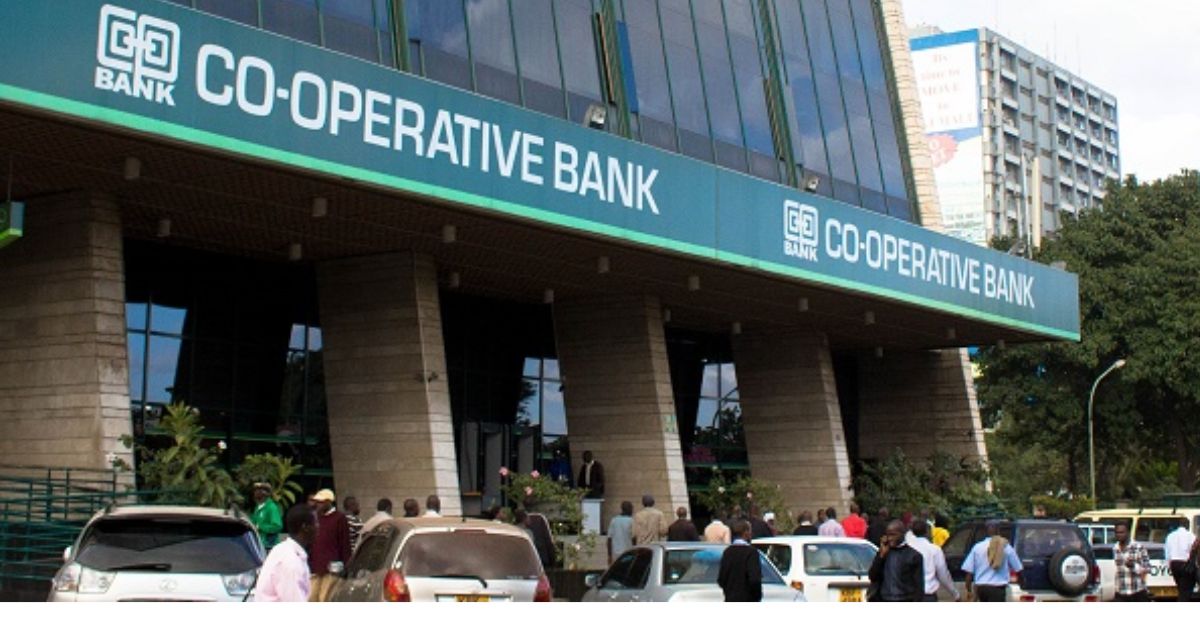
Co-operative Bank of Kenya has reported a 27.2% increase in profit after tax for the first nine months of 2026, supported by stronger lending, rising customer deposits and growth in digital banking.
The lender recorded a profit after tax of KSh27.4 billion for the nine months ended September 30, 2026, up from KSh21.6 billion reported during the corresponding period in 2025.
Profit before tax also increased to KSh35.9 billion from KSh30 billion, reflecting improved performance across the bank’s operations.
The bank’s total assets grew by 11.3% to KSh907.4 billion, as it continued expanding its lending and deposit-taking activities.
Co-op Bank records growth in loans and customer deposits
The bank’s financial performance was supported by an increase in customer deposits and loans issued to individuals and businesses.
Customer deposits rose by 14.8% to KSh642.5 billion, while net loans and advances increased by 22.2% to KSh496.9 billion.
Net interest income, representing the difference between interest earned and interest paid, grew by 12.7% to KSh51 billion.
Operating income increased by 11.6% to KSh75.2 billion, while operating expenses rose by a slower 5.3%.
The bank reported a cost-to-income ratio before provisions of 46.4%.
It also recorded an improvement in loan performance, with its non-performing loan (NPL) ratio declining to 12.9% from 17.1% in September 2025.
Loan-loss coverage improved to 82.2%, compared to 70.4% in the previous year, while the cost of risk dropped from 2.5% to 1.4%.
94% of Co-op Bank transactions happen outside branches
Co-operative Bank continued to expand its digital banking and agency services, with approximately 94% of customer transactions processed through alternative delivery channels.
Its agency banking network had grown to 16,215 Co-op Kwa Jirani agents, alongside 600 ATMs and cash deposit machines.
Customers can also access banking services through mobile applications, internet banking, USSD platforms and a 24-hour contact centre.
Deposits mobilised through agency banking increased by 39% to KSh139.37 billion, up from KSh85.1 billion during the corresponding period in 2025.
The group operated 224 branches across Kenya and South Sudan, including Kingdom Bank, and was supported by 663 SACCO front offices.
Its diaspora banking customer base also exceeded 25,000.
The bank’s workforce grew to 6,630 employees, representing 804 additional jobs compared to September 2025.
Co-op Bank disburses KSh66.6 billion through digital loans
Digital lending remained another major contributor to the bank’s operations.
Co-op Bank reported E-Credit disbursements of KSh66.6 billion during the third quarter of 2026.
Cumulative disbursements since the platform was introduced exceeded KSh568.5 billion, serving 16.2 million loan customers.
The lender also continued supporting micro, small and medium enterprises (MSMEs), which accounted for 16.7% of its loan book and 23.7% of customer deposits.
By September 2026, the bank had onboarded 273,783 MSMEs, with 72,198 businesses receiving training and capacity-building support.
It also expanded its merchant banking services through the CoopTill App, which enables businesses to monitor sales, request payments and access instant Till loans for working capital.
Co-op Bank targets 10 million young customers through Ignite
The lender also increased its focus on youth banking through Ignite, a financial services proposition supported by a dedicated Youth Financial Services Division.
The initiative targets more than 10 million young customers over the medium term.
By September 2026, Co-op Bank had disbursed KSh47.5 billion to more than 585,000 young people to support entrepreneurship, business expansion and income generation.
More than 210,000 young people had also participated in financial literacy and empowerment programmes.
Through the Co-op Bank App, young customers can access digital savings and investment products, including money market funds and bonds.
Assets under management in these youth-focused digital investment products exceeded KSh1.75 billion.
Co-op Bank outlines next phase of expansion
The nine-month results reflect growth in lending, deposits, digital transactions and business banking.
The lender said its next phase of expansion would be guided by its 2025–2029 Good to Great Strategy and Project Angaza.
Project Angaza is an enterprise-wide transformation programme focused on integrating artificial intelligence, data and automation into the bank’s operations.
The initiative is expected to support operational efficiency and the bank’s wider growth strategy.
ALSO READ: Quickmart Shares Set for NSE Debut as Investors Eye Potential Price Surge After Oversubscribed IPO