









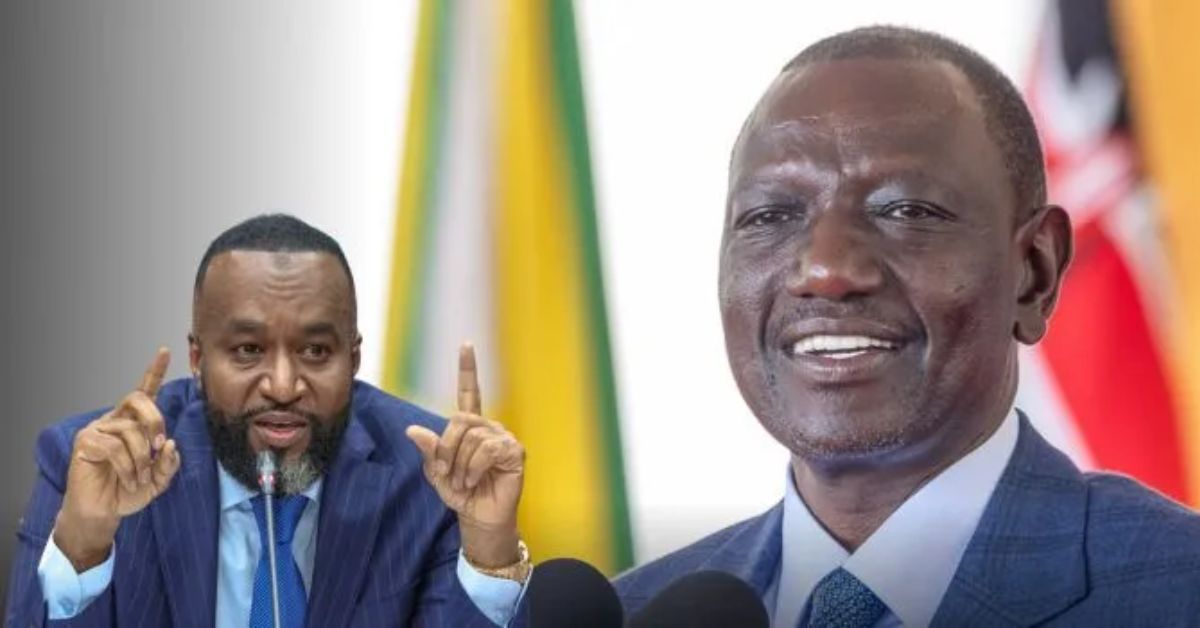
Mining Cabinet Secretary Hassan Joho left President William Ruto and a room full of school heads laughing after making a humorous confession about his academic performance in secondary school.
Speaking at what appeared to be a national conference of school heads on Thursday, November 12, 2026, Joho revealed that he completed Form Four with a D grade, explaining that financial difficulties at home affected his education.
Hassan Joho Explains Why He Scored a D in Form Four
Joho, who addressed the gathering from a podium, recalled his school days and insisted that his academic grade did not reflect his intellectual ability.
The Cabinet Secretary joked that he was never a poor performer because of a lack of intelligence, drawing laughter from the audience.
“Growing up, I left Form Four as a D student. And it is not that I was stupid. Even now, looking at me, you can tell I am sharp,” Joho said.
He explained that his parents struggled to pay his school fees, forcing him to miss valuable learning time.
According to Joho, financial challenges affected many capable students during his generation, with some unable to complete their education without interruptions.
Joho Turns to Ruto With a Humorous Remark About Getting an A
The Mining CS then turned his attention to President William Ruto, using his personal experience to make a point about access to education.
Joho suggested that his academic performance would have been different if he had attended school under the current administration.
He argued that students should be assessed according to their intellectual abilities rather than their parents’ financial circumstances.
The CS jokingly suggested that if he had benefited from such an education system during his school years, he would have scored an A instead of a D.
His remarks prompted laughter from President Ruto and other attendees, turning his personal account into one of the light-hearted moments of the gathering.
Joho’s School Experience Raises Questions About Financial Barriers to Education
Beyond the humour, Joho’s account drew attention to the financial difficulties that can disrupt children’s education.
His experience reflects a challenge faced by families who struggle to meet school fees and other education-related expenses.
For students from financially disadvantaged households, interruptions in learning can affect academic performance regardless of their abilities.
Joho used his story to illustrate why access to education should not depend on a family’s financial position.
ALSO READ: Ruto’s Nicknames for Uhuru, Gachagua and Kalonzo Fail to Catch On as ‘Kasongo’ Sticks