









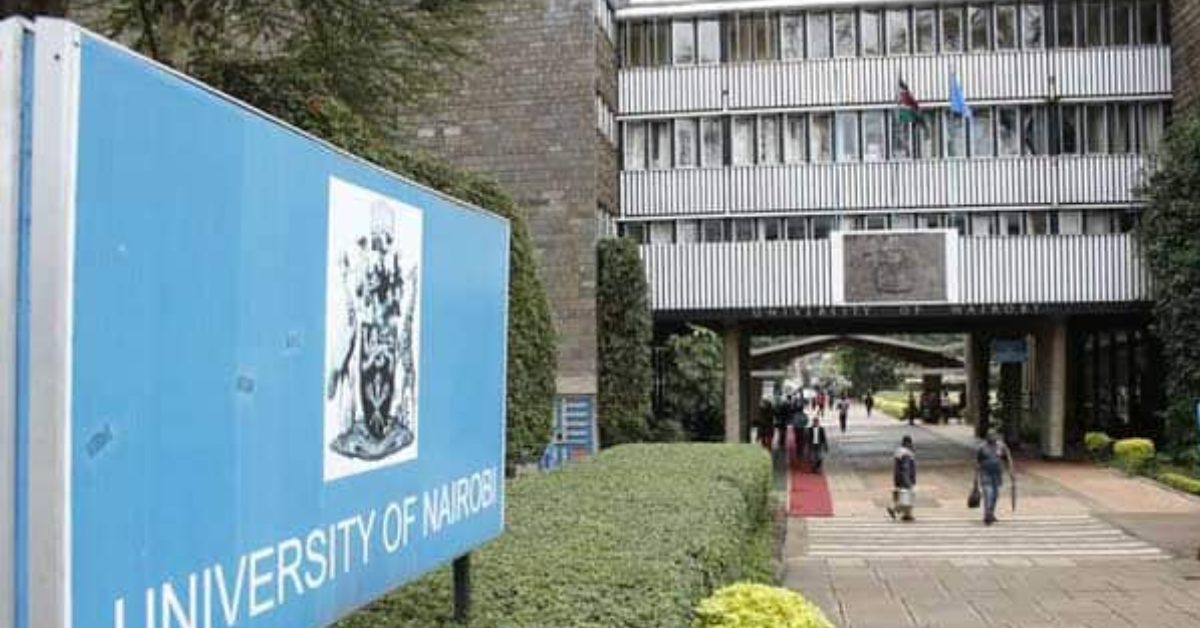
The University of Nairobi (UoN) is facing mounting financial pressure after disclosing that its outstanding debt has reached approximately Sh20 billion, prompting Members of Parliament (MPs) to demand a clear plan to restore the institution’s financial stability.
Vice-Chancellor Professor Ayub Gitau revealed the figures while appearing before the National Assembly’s Public Investments Committee on Governance and Education, which is investigating the university’s financial position and its ability to meet outstanding obligations.
Despite reporting an asset base exceeding Sh220 billion, the university is struggling to settle creditors, meet statutory obligations and manage its growing operating expenses.
Lawmakers questioned how an institution with such a substantial property portfolio could accumulate billions of shillings in debt while struggling to meet its financial commitments.
University of Nairobi Blames Sh1.6 Billion Government Funding Shortfall
University management has attributed part of the financial crisis to reduced government funding following the introduction of the Differentiated Unit Cost (DUC) funding model in the 2017/2018 financial year.
The model determines university funding allocations based on factors such as student enrolment, academic programmes, staffing costs, infrastructure requirements and the expenses associated with running different courses.
According to the Universities Fund, the system was designed to distribute resources according to the varying costs of university programmes.
However, UoN’s acting Director of Finance, Stephen Kimeli, told MPs that the transition resulted in a capitation shortfall of approximately Sh1.6 billion.
Management argued that the funding gap affected the institution’s ability to finance daily operations, particularly as employee salaries and other payroll expenses continued to rise.
The university has also accumulated deficits over the years, making it increasingly difficult to sustain its extensive academic and administrative operations using available revenue.
MPs Raise Alarm Over Unpaid University Staff Pensions
The university’s financial difficulties have also raised concerns about unpaid pension contributions and other statutory obligations.
During the parliamentary proceedings, MPs questioned the institution’s failure to meet certain financial commitments, including remittances intended for employee retirement schemes.
Delayed pension contributions could affect employees who depend on the funds for their retirement benefits.
Lawmakers also raised concerns over losses recorded by some of the university’s commercial and income-generating units, which are expected to provide additional revenue beyond tuition fees, government allocations and research activities.
The committee further examined Auditor-General reports covering the 2020/2021 to 2024/2025 financial years.
UoN’s financial statements for the year ended June 30, 2022, received a qualified audit opinion, alongside a material uncertainty relating to the institution’s ability to continue operating as a going concern.
University officials told MPs that the institution had been classified as technically insolvent during the financial year under review because its liabilities exceeded its assets.
The finding relates to that specific audited period and does not amount to a fresh declaration of insolvency in November 2026.
Why Sh220 Billion in University Assets Has Not Solved the Debt Crisis
Despite its reported asset base exceeding Sh220 billion, the University of Nairobi continues to struggle with liquidity challenges.
The distinction between assets and available cash has become a major issue in the parliamentary investigation.
Although the institution owns valuable properties and other assets, these holdings cannot automatically be converted into money to pay suppliers, salaries, pension contributions and other outstanding obligations.
To address the situation, university management is considering ways to generate additional income from its property portfolio, including renting and leasing selected assets.
A committee led by the Deputy Vice-Chancellor responsible for finance has also been tasked with reviewing asset valuations and identifying opportunities to improve returns.
Other proposed recovery measures include:
- Increasing student enrolment to improve tuition revenue.
- Reviving struggling commercial units.
- Expanding research activities and related income streams.
- Tightening expenditure controls.
- Improving the management and commercial use of university properties.
MPs Give University of Nairobi Until December 1 to Present Recovery Plan
Members of Parliament expressed dissatisfaction with explanations that largely focused on austerity measures and the institution’s property portfolio.
The committee wants management to present measurable financial targets, a clear implementation timetable and practical steps for reducing outstanding debts.
The university has been directed to submit a report detailing its proposed recovery measures by December 1, 2026.
The plan is expected to address the institution’s outstanding liabilities and explain how it intends to meet recurring financial obligations.
For students, employees, suppliers and former staff awaiting retirement benefits, the outcome of the parliamentary review could have significant implications.
The university must demonstrate how it intends to restore financial stability while maintaining teaching, research and other essential services.
ALSO READ: Kindiki Takes Ruto’s Reelection Campaign to Kwale After Issuing Thousands of Title Deeds